 |
The HuT
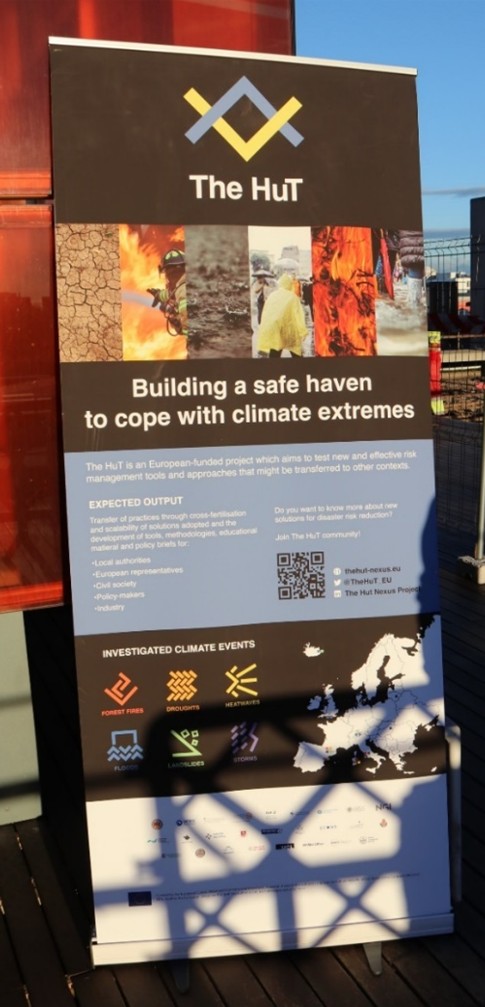
Building a safe haven to cope with climate extremes
|
| |
|
The latest news from the Human-Tech Nexus Project
|
| |
|
Dear reader,
Welcome to the second edition of The HuT newsletter!
The HuT project is dedicated to developing innovative strategies to manage the risks posed by extreme climate events. Our goal is to create trans-disciplinary risk management tools and approaches that are adaptable across various territorial contexts and hazards.
In this edition, we’re excited to share the latest updates on our project, including highlights from our consortium’s activities and insights from the recent General Assembly.
You’ll also get a glimpse into The HuT’s participation in several key events that are shaping the future of climate risk management.
Happy reading, and don’t forget to follow us on social media for more updates! |
| |
|
Multi-hazard warnings across scales
|
| |
|
The phrase multi-hazard refers to two interlinking concepts: (1) the multiple major hazards that a country faces and (2) the context where hazardous events may occur simultaneously, cascading or cumulatively over time (increasingly referred to as compound events), and consider the potential interrelated effects. Current approaches to multi-hazard warning vary but have typically fallen into two categories: (1) single hazards overlayed and treated as independent phenomena and (2) approaches that consider multiple hazards and their potential interactions. The latter being more challenging but have a greater potential to capture real risk. For more information visit the EGU Natural Hazards blog post (2021) on this topic.
To review multi-hazard warning methods, challenges and best practices across the demonstrator territories within The HuT project, University College London led the first-round research under Work Package 2 (Human Behaviors) in Bern, Switzerland in partnership with the University of Geneva. This research, initiated in March 2024, is focused on how selected countries in Europe manage and communicate multi-hazard warnings across scales and documents good Disaster Risk Reduction (DRR) practices. Post-doc researcher Maryam Rokhideh met with and interviewed many risk management experts within the Demonstrator 10 territory, including in the Federal Office for the Environment, the Hazard prevention division, Hydrology Division, Civil Protection, Cantonal offices, Municipal authorities, local hazard specialists, local residents, and university researchers. |
| |
|
The aim was to understand the existing warning systems and learn how these stakeholders coordinate across multiple scales and users to effectively manage multi-risk events.
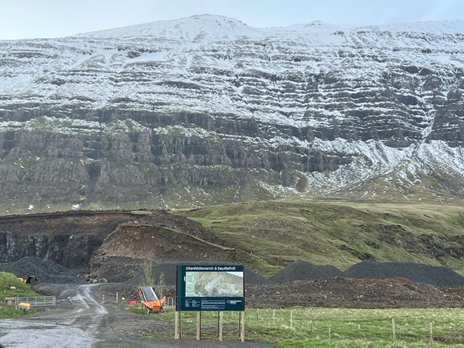
In May, Maryam and research partners from the University of Helsinki, Janina Kayhko, conducted fieldwork in Iceland (Demonstrator 6) where they experienced first-hand how multiple, cascading hazards are managed and warned for by the Icelandic Meteorological Office, Civil Protection, and municipal authorities. Highlights from the trip included interviewing affected individuals and visiting Seydisfjordur, the site of the historic landslide that occurred during the Covid-19 pandemic, and so a multi-hazard event. Our partners in Iceland have been documenting lessons learned from the landslide and will be implementing a novel online warning one-stop shop platform. |
| |
|
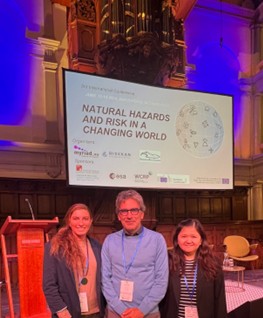
Maryam, Michelle and Steffi at the Natural Hazards and Risks in a Changing World |
| |
|
In June, the HuT team, Michelle, Maryam, and Steffi presented research on effective warnings at the 3rd International Conference on Natural Hazards and Risks in a Changing World: Addressing Compound and Multi-Hazard Risk, organised by MYRIAD-EU, Risk KAN and NatRiskChange.
Janina from the University of Helsinki conducted fieldwork in Val d’Aran, Spain (Demonstrator 2), working closely with ARANTEC to understand monitoring and warning systems on floods, landslides, and river network interactions.
In October, Maryam visited Campania region, Italy (Demostrator 3) to conduct interviews with national, regional, and municipal institutions working under the auspices of civil protection as well as research scientists and volunteer organisations (e.g. Red Cross). The sites visited included the national civil protection office in Rome, regional offices of the Campania region, and the municipal offices of Napoli, Amalfi, Sorrento and Atrani to get a comprehensive picture of the multiple scales involved in multi-hazard warning systems and response.
Maryam also visited the UK (Demonstrator 9) and interviewed experts from the British Geological Survey, UK Met Office, Flood Forecasting Centre, Dorset Council and other key stakeholders involved in multi-hazard warning issuance, communication and action. Questions focused on existing hazard and emergency systems; warning policy, design and decision making and approaches to multi-hazard coordination across scales and users.She also had the opportunity to attend the Dorset Coast Forum (DCF) Conference where the current challenges around coastal change and management were discussed with a wide range of stakeholders present. The meeting illustrated the positive actions being taken to manage coastal heritage and empower communities to utilize their knowledge in coastal planning. It also highlighted some of the challenges that remain around information availability, access and its onward sustainability given organizational and broader limitations and constraints.
Next steps include analysis of the research to inform subsequent tasks on stakeholder engagement and cultural change activities and publish findings.
|
| |
|
Stakeholder Engagement Activities
|
| |
|
Stakeholder engagement is a pivotal component for effective scientific research and development. By involving a diverse array of stakeholders, such as policymakers, industry and community members, disaster managers and civil authorities, and advocacy groups, we can ensure that research addresses real-world problems more effectively and informs the development of practical solutions which meet user needs. Undertaking this type of engagement is critical to The HuT project which aims to find effective strategies to manage the risk associated with extreme climate events. Below we share two examples of recent stakeholder engagement activities.
Demonstrator 7
Geographical focus: Hungarian great plain in the middle Tisza Valley
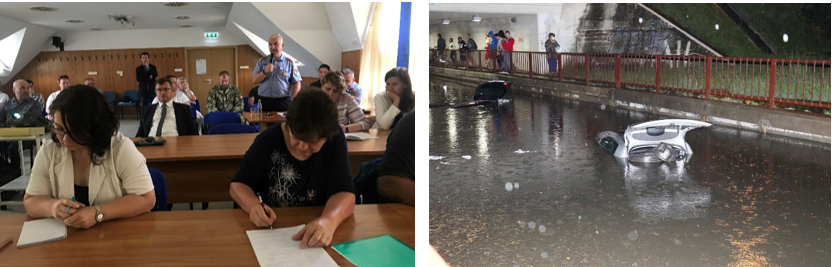
Focus hazards: Urban floods resulting from heavy rains
Stakeholders: 107 municipalities
Purpose of the engagement: The Middle Tisza District Water Directorate (so called KÖTIVIZIG) organized a Local DRR Nexus Forum on 7th of June in Szolnok, Hungary. The meeting aimed to collect useful and appropriate ideas and feedback from stakeholders regarding the mobile phone application developed to enhance the management and prompt reaction of users in the case of pluvial flood events. 39 participants took part in the stakeholder meeting. These participants were from municipalities vulnerable to pluvial flood and included relevant experts from water and disaster management, spatial planning and engineers.
Demonstrator 9
Geographical focus: Dorset County in Southwest England
Focus hazards: Floods, storms and landslides
Stakeholders: District councils, Local Resilience Forum, public bodies, charities and independent coastal partnership
Purpose of the engagement: Followed an initial knowledge exchange workshop in June 2023, a subsequent engagement activity took place in October 2024. In addition to advancing discussions on the provision of weather, hazard, impact-based information to different users, the British Geological Survey aimed to enhance the contextualisation of landslide hazard by installing a weather station to capture very localised meteorological conditions on the cliffs at West Bay. In conjunction with localised expertise, geological understanding and working with the local council, it is envisaged that data will support future messaging around additional complexities of landslides in this area.
|
| |
HIWeather Final Symposium
|
| |
|
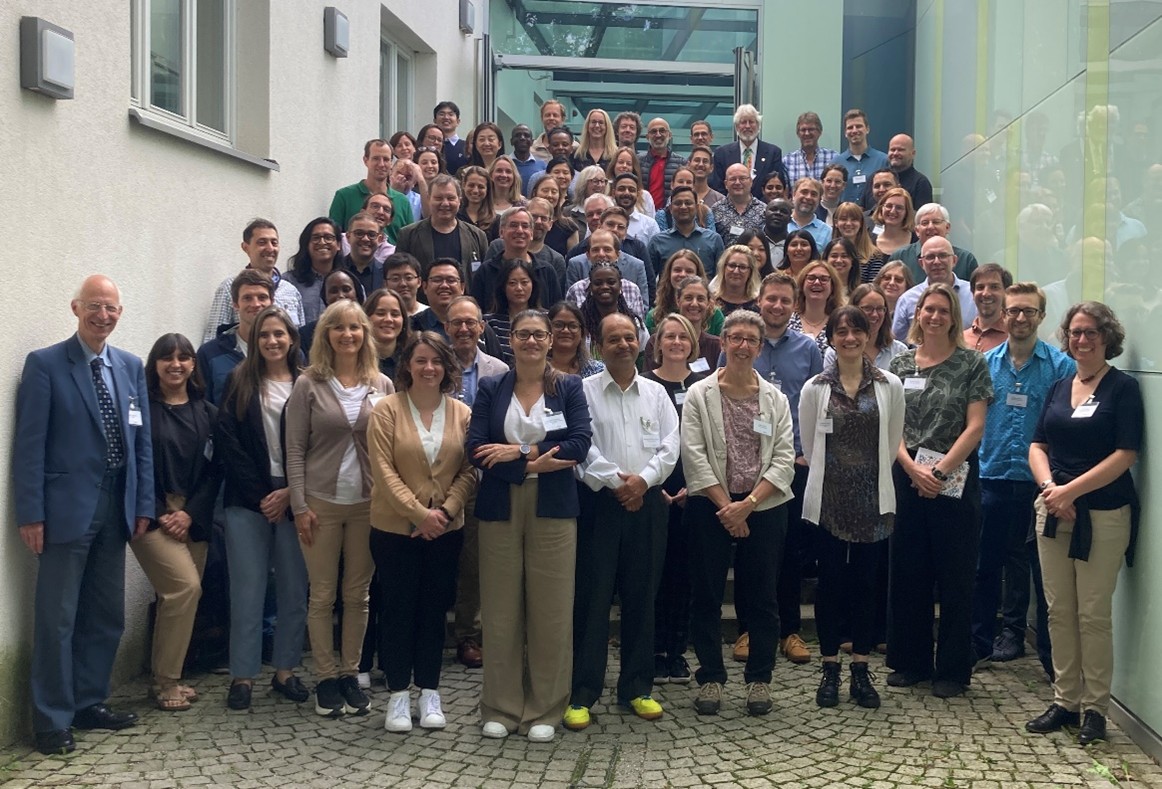
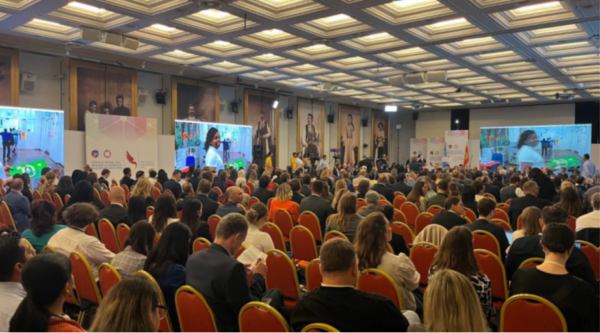
The World Meteorological Organisation (WMO) World Weather Research Programme’s HIWeather Project will be coming to close in December 2024. To mark the end of this multi-year project, a final symposium was held on the 9-13 September 2024 in Munich, Germany. The conference bought together diverse groups to celebrate the projects successes, share new understanding and knowledge, and look forward to a future in which early warnings and early action will save many more lives and livelihoods. |
| |
|
Core themes covered by the conference:
•Understanding & predicting hazards
•Human impacts, Vulnerability & Risk
•Communication
•Citizen science (Guidance Note on ways to include citizen science in weather, climate and water projects)
•Impact-based Forecasting & Warning
•Evaluation & Warning Value Chain
•Online posters
The conference brought together around 90 scientists (in-person) and 20 online with representation from national meteorological services, academia, private sector, emergency managers and humanitarian organizations. Researchers from The HuT project participated in presentations and panel sessions across several of the session themes. It was an opportunity for The HuT to highlight themes (e.g. use of the Warning Value Chain; requirements for vulnerability and exposure in risk forecasting; predicting and evaluating hazards) which will be further progressed within the project. The final session focused on a Forward Look and outlined future WMO projects and their relationship to the Early Warnings 4 All (EW4All) initiative. This initiative will also be a topic of discussion at The HuT’s Annual Meeting in November 2024.
|
| |
|
News From Our Sister Projects |
| |
 |
|
PARATUS |
|
Promoting disaster preparedness & resilience by co-developing stakeholder support tools for managing the systematic risk of compounding disasters:
Download the third newsletter from the PARATUS Project and discover the latest updates, exciting opportunities and news from the projects of the Societal Resilience Cluster!
PARATUS Consortium Meeting and Multi-hazard DRR Academy are fast approaching |
|
|
| |
 |
|
SYNERGIES |
|
SYNERGIES is building on research from six previous projects (ENGAGE, RESILOC, LINKS, IMPACT, BUILDERS, Ready2Help). The project integrates findings, refines practices, and guides three real-life Preparedness Cases in La Réunion, Malta and Rotterdam. The ENGAGE project shared the testimonies of the citizens they had met over the years through a series of video pills that recount the citizens’ experiences and reactions to the seismic events that hit L’Aquila in 2009 and central Italy in 2016. The legacy collected by the ENGAGE project will be shared through SYNERGIES’ social media channels in the coming period to highlight the perspectives of the citizens which have been involved in these tragic events. Stay tuned, two new videos every week! |
|
|
| |
 |
|
MYRIAD-EU |
|
The Myriad project has two new reports describing recent events they’ve been involved in:
1. Reducing Risks Together: Bridging Disaster Resilience and Climate Adaptation Strategies Workshop report at the European Civil Protection Forum 2024: https://zenodo.org/records/12744673
2. Report on Joint Conference - 3rd International Conference on Natural Hazards and Risks in a Changing World: Addressing Compound and Multi-Hazard Risk: https://zenodo.org/records/13149185
|
|
|
| |
 |
|
DISTENDER |
|
DISTENDER Launches Video Series: Exploring Participatory Approaches for Climate Resilience
How does DISTENDER use participatory approaches in strategy development? How have these methods benefited case studies across Europe? How will the Decision Support System empower policymakers to implement and replicate effective strategies? |
|
|
| |
HuT Project Outputs
New HuT Factsheet on Designing Early Warning Services is now available online!
New Publications:
· Piciullo, L., Abraham, M.T., Drøsdal I.N., Paulsen, E.S. (2024) An operational IoT-based slope stability forecast using a digital twin. Environmental Modelling & Software, 106228. https://doi.org/10.1016/j.envsoft.2024.106228
New Project Deliverables:
All project deliverables are made available via the Project Deliverables webpage.
Working Group Meetings:
· Weather and Climate Working Group: Next Meeting will take place in January 2025.
· Internet of Things (IoT) Working Group: Next meeting will take place in the new year.
If you would like to participate in our working group discussions, then please get in touch with joanne.robbins@metoffice.gov.uk (Weather & Climate WG) and luca.piciullo@ngi.no (IoT WG).
|
|
| |
|
Upcoming Events:
Our partners in Switzerland are hosting a conference in January: RIMMA2025 - International Conference on Forecasting, Preparedness, Warning, and Response.
Researchers from The HuT project are convening several session at EGU 2025, in cooperation with partners:
· ITS4.15/NH13.8. Advancing Disaster Resilience through Transdisciplinary Approaches: Insights and Innovations (Convener: Gaetano Pecoraro; Co-conveners: Maria Vittoria Gargiulo, Cicilia Steffi Lukman, Julius Schlumberger, Janne Parviainen)|
· SC 3.3. Navigating Transdisciplinary Research: Tools and Strategies for Early Career Scientists and Practitioners, Co-organized by GM12/NH12/OS5 (Convener: Maria Vittoria Gargiulo; Co-conveners: Gaetano Pecoraro, Cicilia Steffi Lukman, Julius Schlumberger, Janne Parviainen)|
· NH3.7. The use of monitoring, modelling, and forecasting in Landslide Early Warning Systems (Convener: Luca Piciullo; Co-conveners: Tina Peternel, Stefano Luigi Gariano, Neelima Satyam, Samuele Segoni)
LandAware Workshop 2025, 17-19 September 2025, Ljubljana, Slovenia. LandAware is one of the associations included in The HuT Legacy Advisory Panel. The main objective of this workshop is to highlight and share recent developments and discuss ongoing challenges in the field of landslide early warning. |
| |
Views and opinions expressed are, however, those of the author(s) only and do not necessarily reflect those of the European Union or REA. Neither the European Union nor the granting authority can be held responsible for them.
|
| |
|